The WWF is run at a local level by the following offices...
- WWF Global
- Adria
- Argentina
- Armenia
- AsiaPacific
- Australia
- Austria
- Azerbaijan
- Belgium
- Bhutan
- Bolivia
- Borneo
- Brazil
- Bulgaria
- Cambodia
- Cameroon
- Canada
- Caucasus
- Central African Republic
- Central America
- Central Asia
- Chile
- China
- Colombia
- Croatia
- Democratic Republic of the Congo
- Denmark
- Ecuador
- European Policy Office
- Finland

Rising Global Temperature
Earth’s average surface temperature has increased by about 1°C since the late 1800s, mainly due to human activities like burning fossil fuels and deforestation. Most of this warming has occurred in recent decades, with record-high temperatures becoming more frequent and widespread.
In the Philippines, this leads to hotter days, stronger typhoons, and increasing risks to health, food supply, and livelihoods. As one of the most climate-vulnerable countries, the Philippines faces urgent pressure to strengthen climate resilience, reduce emissions, and protect communities already exposed to extreme heat and weather.

Warmer Oceans
The oceans absorb more than 90% of the excess heat trapped by greenhouse gases, causing sea temperatures to rise steadily over time. This long-term warming has accelerated in recent decades, with ocean heat reaching record levels and disrupting marine ecosystems worldwide.
In the Philippines, warmer seas are already driving coral bleaching, damaging marine biodiversity, and reducing fish populations that coastal communities rely on for food and income. It also strengthens tropical cyclones by providing more energy for storm development, increasing risks for an archipelagic nation.

Rising Sea Levels
Global sea level has risen by about 20 cm (8 inches) since 1900, driven by melting ice sheets and the expansion of warming seawater. The rate of rise is increasing as global temperatures continue to climb.
For the Philippines, this means more frequent coastal flooding, shoreline erosion, and saltwater intrusion into freshwater systems. With many communities living along the coast, rising seas highlight the urgent need for adaptation, stronger coastal protection, and long-term climate action.

Severe Drought
Prolonged periods of below-average rainfall, combined with rising temperatures, are reducing water availability as evaporation increases and soil moisture declines. These dry conditions are becoming more frequent and intense due to climate change.
In the Philippines, droughts linked to El Niño lead to reduced rainfall, lower reservoir levels, crop losses, and water shortages. These impacts strain agriculture, food supply, and household water access, especially in vulnerable areas.
The youth play a critical role in addressing climate change.
Beyond being victims, they are key assets who will one day become leaders in climate action.
Empowering them is a must if we want a greener future.
Robert E.A. Borje
Climate Change Commission Vice Chairperson and Executive Director
Climate action grows stronger when many people take small, consistent steps together.
- Turn awareness into action—advocate locally
Speak up in your community by supporting climate-friendly policies, encouraging local leaders to act, and joining discussions that push for stronger environmental protection. Collective voices can influence real change.
- Use your voice for the planet
Share sustainability tips you’ve personally tried with friends and family, and raise everyday awareness through conversations that inspire small but meaningful changes. Create and share sustainability-focused content online to reach a wider audience and encourage action.
- Get involved in community and school environmental initiatives
Volunteer for local environment programs such as clean-ups, waste segregation drives, mangrove or tree planting, and other sustainability efforts in your barangay or school. These hands-on activities help reduce flooding, improve air quality, and protect ecosystems.
- Report and prevent environmental harm
Help enforce local environmental laws by reporting illegal dumping or burning of waste. Community action plays a key role in reducing pollution and protecting waterways.
- Strengthen disaster preparedness in your community
Get involved in local disaster preparedness efforts by learning and knowing evacuation routes, early warning systems, and emergency protocols, while also volunteering in community drills and response activities. This helps strengthen readiness and can save lives during typhoons and floods.
- Support climate-friendly choices in your community
Choosing to support local businesses that practice sustainability helps reduce emissions while strengthening local economies.
- Engage and lead in youth climate spaces
Join forums, youth groups, and community discussions focused on environmental action. Vote for or support school and community leaders who actively champion sustainability and climate action.
- Share verified climate information
Helping stop misinformation ensures communities make informed, science-based decisions.
Governments, institutions, and development partners are working to address climate risks, but the scale of the challenge continues to grow.
In the Philippines, national and local governments are strengthening disaster preparedness, improving flood control systems, and developing long-term climate adaptation plans. The Climate Change Commission leads policy coordination on climate action and resilience across sectors.
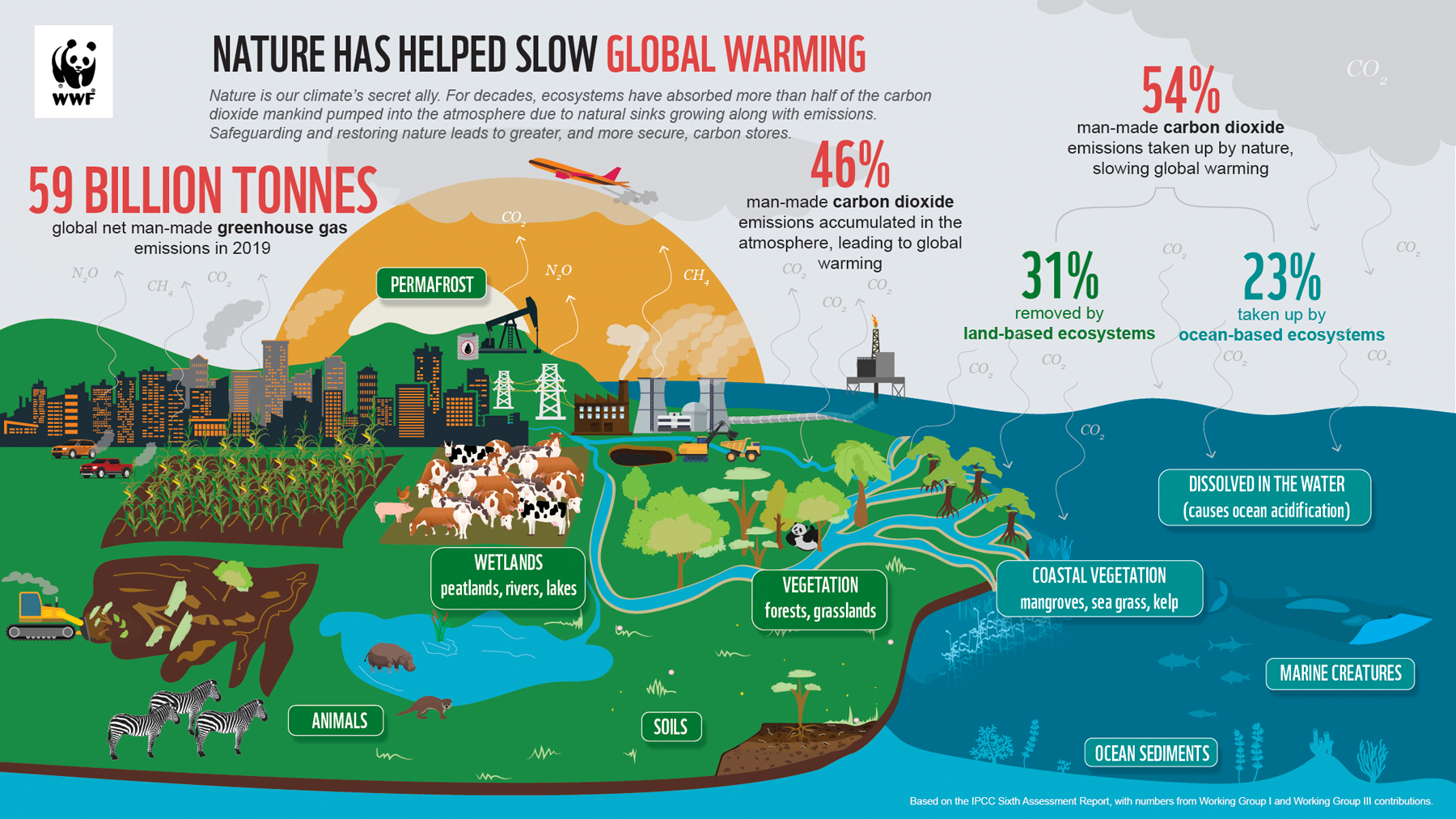
WWF-Philippines works with communities and partners on climate and energy solutions through programs such as renewable energy transition initiatives, climate resilience and adaptation projects, and nature-based solutions like mangrove rehabilitation and forest conservation.
Despite these efforts, rising risks continue to challenge infrastructure, food systems, and livelihoods—making stronger, faster, and more coordinated action increasingly urgent.